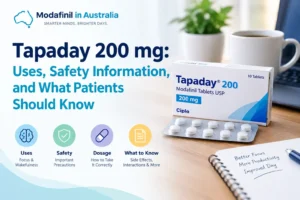


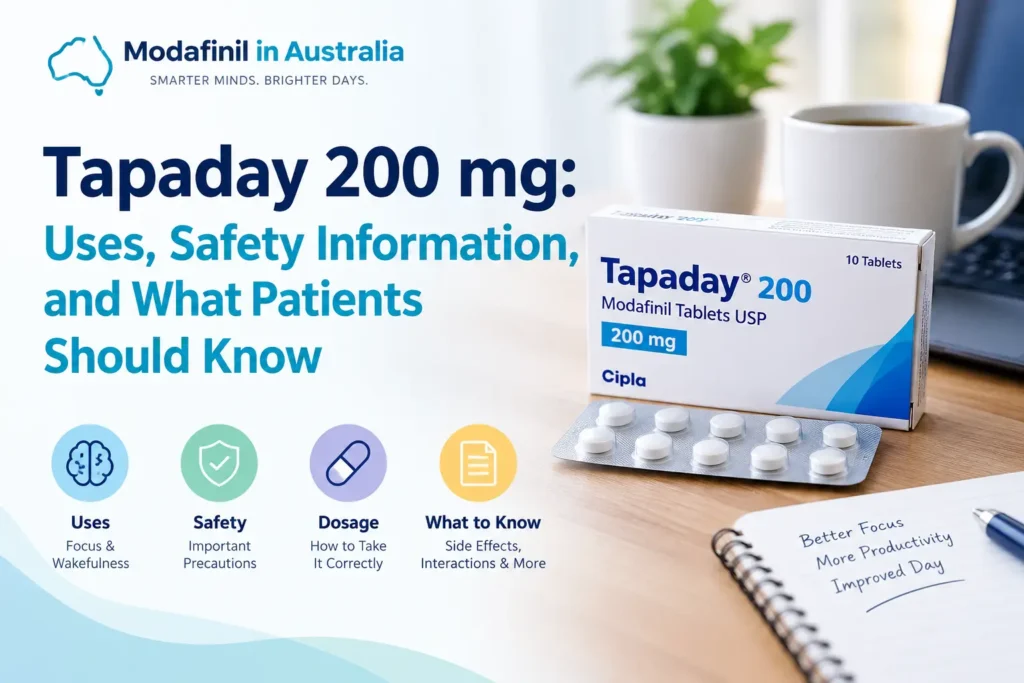
Tapaday 200 mg and Tapaday 200 are search terms people may use when looking for information about prescription pain medicines containing tapentadol. Before considering any product, it is important to confirm its active ingredient, formulation, registration status, and suitability with a qualified healthcare professional.
This guide explains key information about tapentadol, its potential uses, important safety considerations, and the questions patients should ask their doctors. It is intended for general educational purposes and is not a substitute for professional medical advice.
The keyword Tapaday 200 mg refers to a named product and strength that readers may encounter when researching pain relief. However, the precise formulation and Australian registration status of Tapaday should be verified rather than assumed from the product name alone.
Tapentadol is an opioid analgesic used in certain circumstances to manage pain. In Australia, registered tapentadol medicines include immediate-release and sustained-release formulations, which have different purposes and instructions for use.
For example, the Therapeutic Goods Administration (TGA) provides official information about registered tapentadol products, including PALEXIA SR 200 mg.
Patients should never assume that two products with similar names or strengths are interchangeable.
People searching for Tapaday 200 may want to understand a product’s intended use, formulation, possible adverse effects, and availability.
Before relying on information from an online listing, check the following:
These checks are particularly important for opioid medicines because differences in formulation, strength, and dosing can have serious consequences.
Tapentadol is an opioid pain medicine that acts on the central nervous system. Depending on the formulation and approved product information, it may be prescribed for certain types of moderate to severe pain.
A doctor determines whether an opioid is appropriate after assessing the cause of the pain, its severity, the patient’s medical history, and other medicines being taken.
Treatment decisions may also consider non-opioid medicines, physiotherapy, rehabilitation, and other pain-management approaches.
For reliable information, consult Healthdirect Australia’s tapentadol medicine guide.
Tapentadol is a potent prescription medicine and is associated with significant risks. It should only be used under appropriate medical supervision.
Opioid medicines can cause physical dependence, misuse, and addiction. Risk varies between individuals and may be affected by the dose, duration of treatment, and personal medical history.
Patients should follow their prescription and speak with their doctor before making changes to treatment.
Tapentadol can cause dangerously slow or shallow breathing. The risk may be greater when treatment begins, following a dose increase, or when the medicine is combined with other substances that cause sedation.
Seek emergency medical assistance if someone taking an opioid develops severe breathing difficulties or cannot be awakened.
Alcohol, sleeping tablets, sedatives, certain antidepressants, and other opioid medicines may interact with tapentadol. Some combinations can lead to profound sedation, breathing difficulties, coma, or death.
Tell your doctor and pharmacist about all prescription medicines, non-prescription products, and supplements you use. Do not combine medicines without professional advice.
Potential adverse effects of tapentadol include nausea, vomiting, dizziness, constipation, and drowsiness. More serious effects can also occur.
Contact a healthcare professional if side effects are persistent, severe, or concerning. Seek emergency care for signs of a serious reaction, including difficulty breathing or loss of consciousness.
Anyone researching Tapaday 200 mg in Australia should confirm the exact product and its regulatory status before making a decision.
The TGA maintains the Australian Register of Therapeutic Goods (ARTG), which helps consumers and healthcare professionals verify registered therapeutic products.
Visit the Therapeutic Goods Administration to learn more about medicine regulation and search for product information.
Do not assume that a product advertised by an overseas website is registered in Australia, legally available, or suitable for personal use.
Online medicine listings may not always provide complete or accurate information. Before obtaining any prescription medicine, consider these precautions:
A trustworthy medicine-information resource should prioritise accurate product details, regulatory compliance, and patient safety rather than unsupported claims about effectiveness.
Tapaday 200 mg is a product name and strength used as a search term for pain-medicine information. Its precise ingredients, formulation, and regulatory status should be confirmed using reliable product documentation and advice from a pharmacist or doctor.
Tapaday 200 is another way people may search for the same named product. Search terms alone do not establish the medicine’s composition, safety, or legal availability.
Registered tapentadol medicines in Australia are prescription medicines. Requirements for a specific product should be confirmed through the TGA and a qualified healthcare professional.
Yes. Possible effects include nausea, dizziness, constipation, and drowsiness. Serious risks include respiratory depression, dependence, and potentially fatal interactions with other sedating substances.
Alcohol can increase the sedative effects of tapentadol and raise the risk of dangerous breathing problems. Follow the official product instructions and your healthcare professional’s advice; do not drink alcohol while using a medicine when its instructions prohibit it.
Start with Healthdirect Australia and the TGA’s official medicine register. A pharmacist or prescribing doctor can help interpret the information for your circumstances.
Searching for Tapaday 200 mg or Tapaday 200 should be the beginning of a careful information-gathering process, not a substitute for professional medical advice. Confirm the product’s ingredients, formulation, and regulatory status before relying on any online description.
Tapentadol can be useful for appropriately selected patients, but it carries important risks, including dependence, serious drug interactions, and potentially life-threatening breathing problems. Always consult a qualified healthcare professional before starting, stopping, or changing opioid treatment.
Medical disclaimer: This article provides general educational information and does not recommend purchasing, starting, or changing the dose of any prescription medicine without professional guidance.
Share :